Interactive installation · 2026
Stay
A recommendation feed learns from attention: it notices where a person lingered and shows them more of the same. Stay translates this mechanism into botany and into the space of the gallery. The viewer grows a tree by standing still and loses it by getting distracted.
The title repeats what the feed expects from a person.
How the work functions
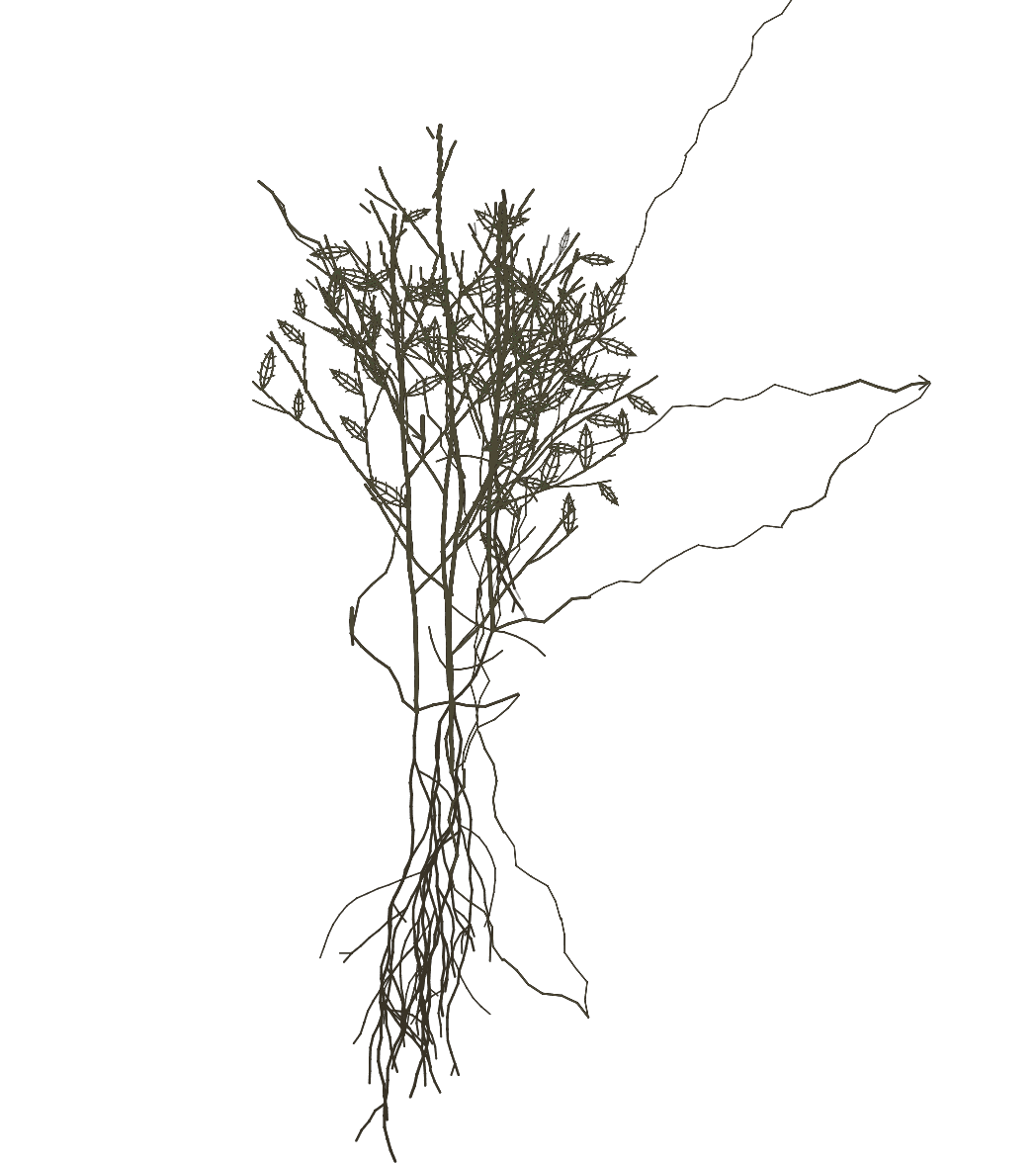
While the viewer stands still, a root goes down beneath them and a trunk rises: branches, leaves, veins. If the person walks around, no trunk is laid down, and rootless shoots creep across the field. An abandoned tree withers and does not recover. It remembers the one who returns: growth speeds up in their presence.
The roots are ancestors, lineage, the female line.
You are the one who grows, but you feed on what came before you.
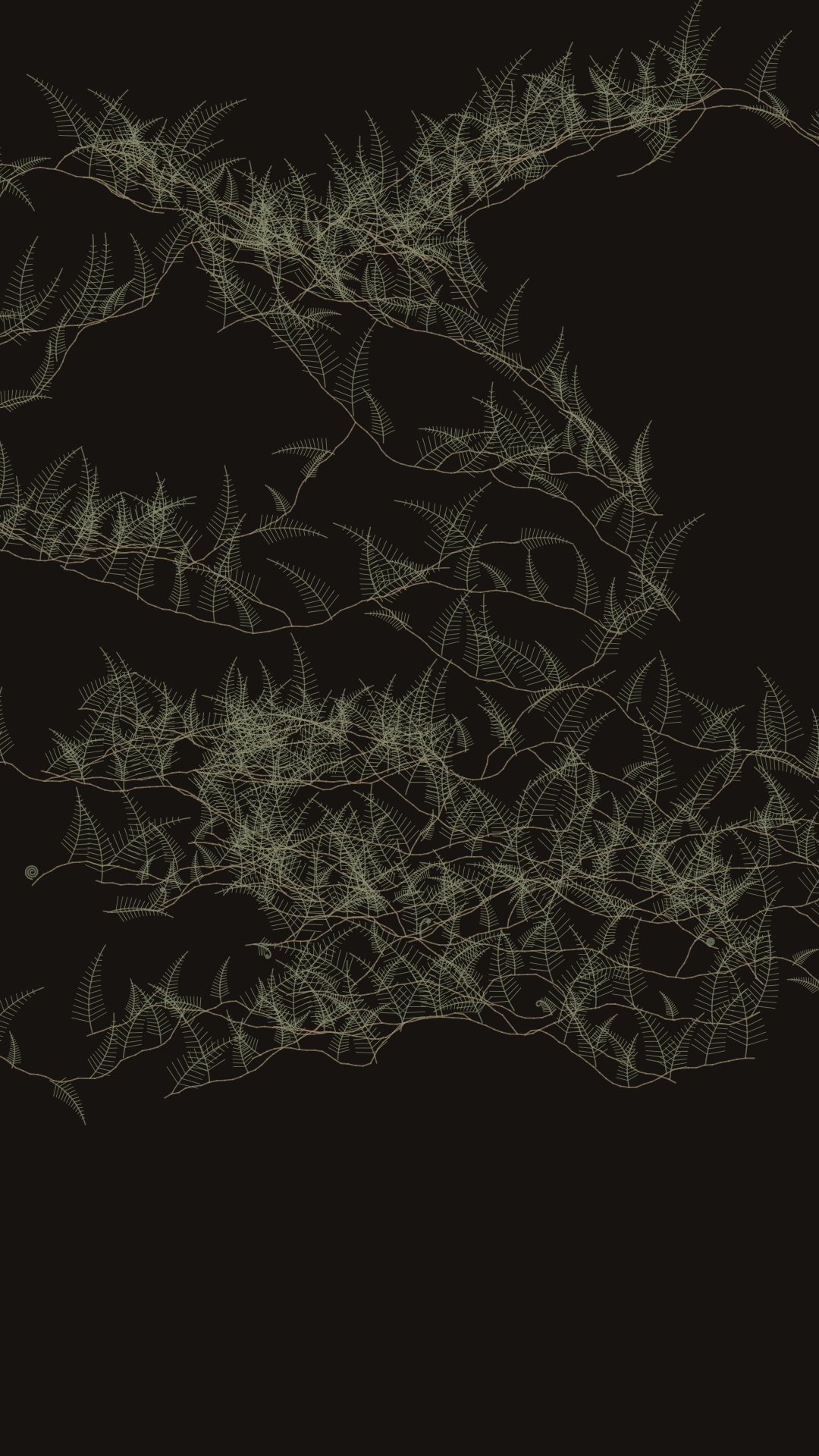
Nearby, other shoots rise up on their own. They grow without any effort from the viewer and stir at the edge of vision, which barely distinguishes colour yet reacts sharply to movement, so the shoots lure you away in jolts. When looked at, they flare up; they do not recognise the one who returns.
This is how the workings of the feed are translated into botany. The rhizome does not know how to wither: it is the feed, the constant noise of the environment.
Only what attention has grown withers.

The work rests on Deleuze and Guattari’s pair “tree and rhizome”:
tree
root, trunk, vertical
Growth from a single point, hierarchy and genealogy: every branch has a beginning, every beginning has a root. In the work, the tree is grown by attention and held by the roots of the lineage. It can be lost.
rhizome
a network without a centre
Any point is connected to any other; there is neither beginning nor end; broken off, it keeps growing from the middle. In the work, the rhizome is the feed: the shoots rise on their own, require no effort and never wither.
Scientific basis
The mechanics draw on research into attention:
Attention Restoration Theory (Kaplan) describes how nature restores attention; the work reverses this arrow: attention grows nature.
On the side of the feed, it draws on how recommender systems measure attention: YouTube ranks videos by expected watch time (Covington et al., 2016).
Context
Rafael Lozano-Hemmer builds works on tracking the viewer: in Zoom Pavilion (with Krzysztof Wodiczko, 2015), cameras find visitors’ faces and zoom in on them.