Census
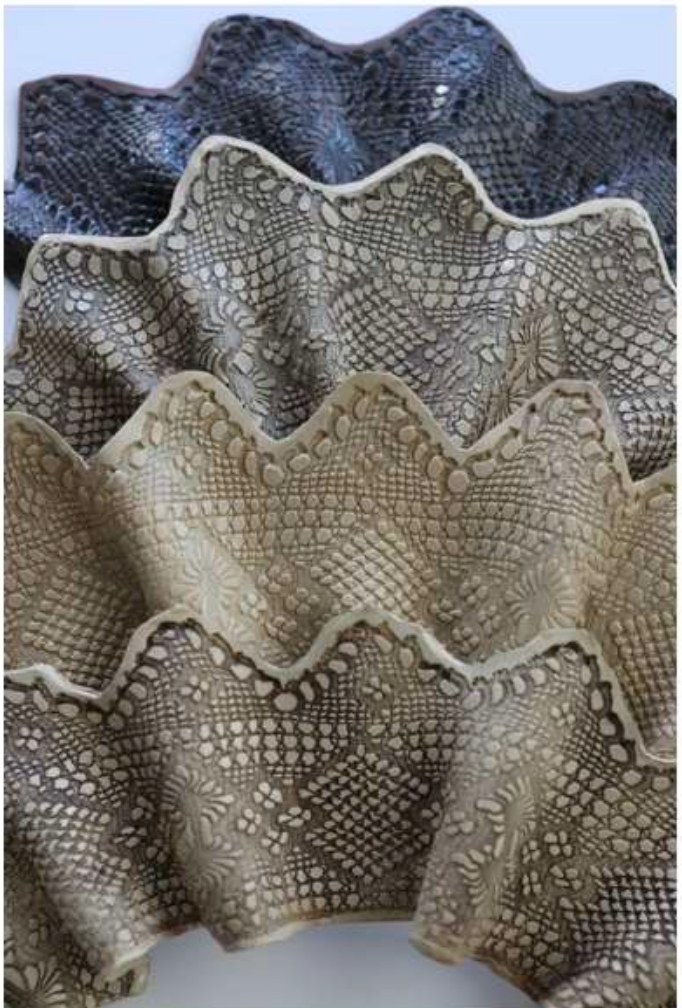
This project grew out of reflections on how memory is preserved and how it changes. At its core is antique filet lace, made by hand by the women of my family. In it, every loop and every cell forms the primary code of women’s everyday life. Day after day, women created such patterns: identical in structure, yet each time slightly different. This is a form of time: rhythm, cycle, repetition, manual labour in which every variation arises from one and the same rule.
When lace passes into ceramics, the system breaks: empty cells are filled, and filled ones become empty. This inversion shifts the role of emptiness and density: what once functioned as background becomes the carrier of meaning.
A delicate material that once quietly dissolved into daily life gains weight and tangibility, turning into a lasting trace. Each imprint is inevitably unique, even though the strict grid-matrix of the pattern stays the same.
Memory here no longer looks like a closed archive: it is a living process in which something can be preserved only by allowing the form to change a little each time. This is how tradition does not disappear but gains a chance to pass into the future — through change, through the preserved trace as a living structure of time and continuity.